
26 Apr Considering AI for Your Healthcare Application
The 2020s have started as the decade of AI. Self-driving cars use it, smartphones unlock by it, influencers generate content with it, non-artists create art with it – with certainty, AI is well-known. And the use of AI has been suggested for use in practically every application one might consider. But, before hurrying to join the market for your healthcare application, and as with any other emerging technology, there are significant considerations to weigh during design and implementation.
Demystifying AI for Healthcare
When we talk about AI for healthcare today, it’s important to clear the air and state that we aren’t talking about robot doctors replacing human doctors during your next doctor’s visits. Most approved uses of AI in the medical industry have been an augmentation of existing technology, particularly refining the data processed from medical imaging. And in almost all cases, this augmentation of data is not without human feedback, for reasons touched upon later.
As of October 2022, FDA has disclosed close to 180 AI/ML-enabled medical devices that have been submitted to the FDA. In the next few years, this number is expected to grow significantly. The majority of the AI/ML-enabled devices will include AI/ML algorithms to improve efficacy, consistency, and performance, perhaps also help to reduce mundane tasks where human errors could be high when appropriate. It is within this context that we are discussing a few considerations for AI algorithms for healthcare applications.
About the Data
Most importantly, the problems being solved by any technology should be considered from the human angle. A computer follows orders literally – teach a robot to bake cookies, and it will never experiment with the recipe. So how can a program create a novel painting? Well, the underlying solution that AI provides is to take one million pieces of existing art, with textual descriptions, and churn them through tons of matrix math to abstractly associate each piece of art with its description. Then, when the reverse operation is performed – feeding in words – an image that ostensibly corresponds to those words is created.
But, if the only pictures initially fed in are gauche portraits of dogs, a watercolor landscape including cats can never be generated, at least not directly. That is, the AI cannot create beyond its initial training data set, by definition of how the underlying algorithms are constructed. In addition, figuring out which words generate what exact output – reverse engineering the “mind” of the AI – is not a generally solvable problem, given how the complexity of that original matrix math to build its underlying model. Conversely, when a human paints, they can innovate and pivot. Many medieval scribes who had never seen a lion scribbled passably ferocious creatures in the margins of their manuscripts – their creations were only limited by their imagination, and creating an expanded context beyond their “trained” knowledge was as simple as conveying a simile “like a cat, but bigger and with untamable neck fur.”
Because AI is restricted to the context of its training, the most reliably-functioning AI are trained from data sets that most narrowly fit their application. Per the FDA-approved AI-enabled products mentioned earlier, the training sets of these products often come from previous non-AI iterations of the product line. A narrow set of data with a well-defined labeling set leads to a topical AI that can succinctly act within the context of its underlying product. No “lions” need exist.
Training the AI
Collecting adequate data that contains enough permutation to cover the information set being represented already stands as a significant design hurdle. But after the data is collected, AI must still be trained on the data. As with any set of data, the statistical makeup of that data is important. The statistics of the data inform the statistics of the AI’s output.
Take underrepresentation of data, for example. Many facial recognition training datasets only include people of one culture, and the AIs trained on those datasets. And even when all intended categories of data are represented, quantifying confidence can be important. One AI dataset for detecting cancer in tissue images led to a detection of the presence of a ruler in the image as the deciding factor for ambiguous images, due to rulers being predominantly present in known cancer samples.
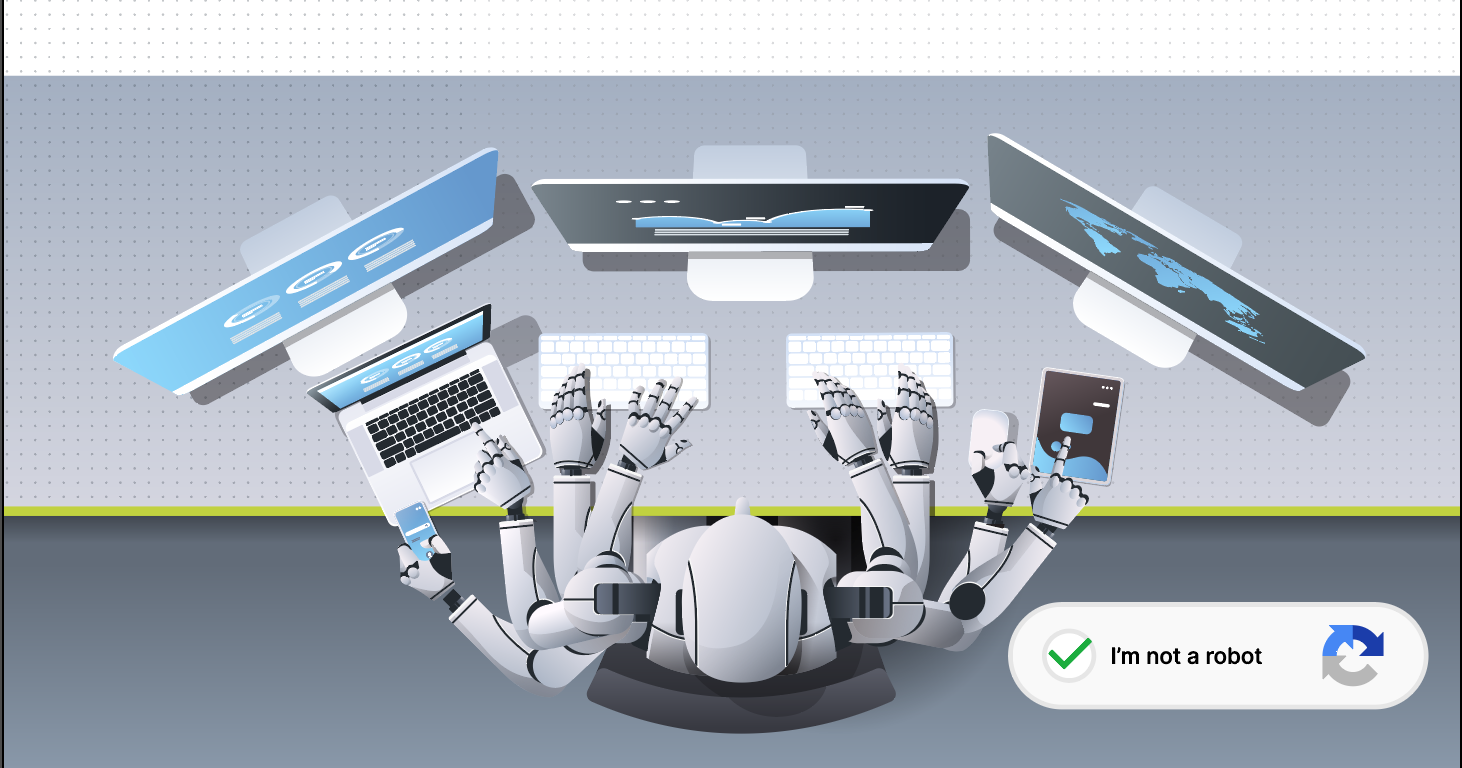
Gathering statistically sound data can often be a concerning proposition. To avoid bad outcomes from training, humans can be kept in the mix. Along with confidence levels in output, including humans as the final reviewer of all AI-produced output is present in the vast majority of successful FDA submissions involving AI. We act as our own final line of defense. Understanding that AI remains an imperfect, but potentially time-saving solution, and letting humans handle the final decisions. From taking the wheel of a self-driving car to finding the perfect angle so the social media image filter looks just right, humans are very good at picking up where AIs fall short. Even OCR, one of the most successful AIs, had some of its largest applications sanity-checked through the use of first-generation ReCAPTCHAs.
AI in the Wild
Overall, caution is key. As with any emerging technology, voices in the community, often the loudest, claim impossible benefits with no pitfalls. As a tool, AI can work, but only when it can be adequately trained, and often sanity checked by a human. And restraint should be practiced where an AI explicitly won’t work, such as places where exact knowledge of the underlying decision algorithm is necessary for preventing unexpected device operation or triaging device failure. With enough data, one might even train an AI to know when spinning up an AI is appropriate.
In the medical industry, this caution should be taken upfront. Recognizing the emerging market as far back as 2019, the FDA has provided guidance on the usage of AI (or Machine Learning in general) in medical devices. This includes additional provisions for premarket approval, monitoring of real-world performance, and regular reporting of algorithmic changes to the FDA. While that implies that AI in medical devices might require a longer and more involved path to market, it leaves that path open to careful innovation using machine learning.
Curious as to what an AI would say about itself, I asked. Unlike the memetic answer that an influencer might post, in response to “Can you tell me about AI?”, the GPT-3 based chatbot that I asked simply responded, “I was thinking.” An interesting answer, but that’s certainly pareidolia rather than truly deep understanding.

Chris is a graduate of the University of Pittsburgh with a BS in Computer Engineering and a minor in Classics. Outside of the digital realm, Chris is a semi-pro confectioner and connoisseur of purposefully terrible movies, literature, and music.
- Considering AI for Your Healthcare Application - April 26, 2023
- Will it Work in Denver? - July 7, 2016
- The Tech Before Christmas - December 22, 2010