

09 Jun Ep 45 How We Ran a Clinical Study Without Millions
The Advantage of Rapid Prototyping in Wearable MedTech Development
Modern cancer treatments are getting better at targeting specific forms of cancer. However, this improved effectiveness often introduces lethal side effects. Skribe Medical is developing wearable technologies to help oncologists monitor and manage these side effects and ultimately improve cancer survivability.
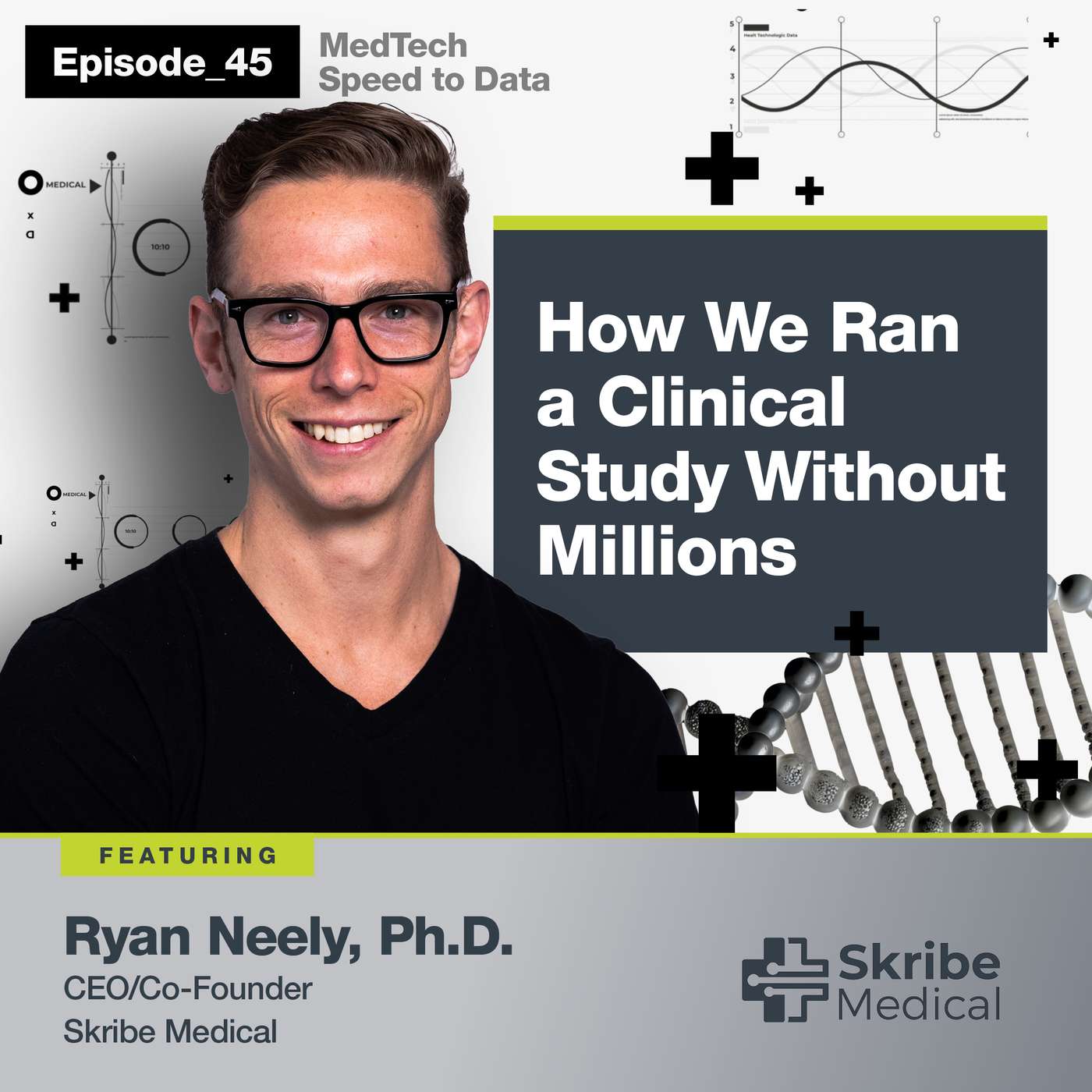
In Episode 45 of the MedTech Speed to Data podcast, Key Tech’s Andy Rogers has a conversation with Ryan Neely, Skribe Medical’s CEO and co-founder, about the startup’s approach to rapid prototyping, clinical trials, and wearable technology.
Need to know
- Cancer treatment can be lethal — The most effective drugs often come with black box warnings of harmful and lethal side effects.
- 600,000 US patients are at risk of cardiotoxicity — Toxic drugs damage the heart, leading to complications like arrhythmia and heart failure.
- Managing cardiotoxicity can delay cancer treatments — Oncologists must now schedule patients for third-party ECG testing, which takes time and delays treatment.
The nitty-gritty
Skribe Medical is developing a wearable ultrasound sensor that detects cardiotoxicity signals for use in oncology clinics. “We have a patch that can be worn to detect cardiotoxicity and really streamline monitoring of heart health,” Neely says. “Rather than an oncologist sending a patient to get a cardiac ultrasound, which could take weeks, the patch can just be placed above the heart for about five minutes. We record a bunch of different signals, pass them through an AI model, and then we can give them either a thumbs up or a thumbs down.”
Neely goes on to explain how the in-clinic wearable approach delivers benefits beyond better patient outcomes. “The first device that we’re building is intended to be used in the clinic by a nurse or a medical assistant. By the time the doctor is there, you’ve got your answer.”
Designing a wearable device rather than an implant created several advantages for Skribe Medical during its early development. “In a regulated industry like medical devices,” Neely explains, “it’s like a little bit of a chicken and egg where people say, ‘we’d like to see some clinical validation’ and you’re thinking, ‘Well, I don’t have a million dollars to fund that.’ In a non-invasive device, any opportunity that you can have to test, even if it’s this big, bulky thing, you can get some data.”
Skribe Medical’s technology can extend to other aspects of oncology, including peripartum cardiomyopathy, a rare form of heart failure arising towards the end of a pregnancy.
Long-term, Neely envisions building the longitudinal training data needed for predictive monitoring. “What we’d like to do is be able to say, ‘two weeks from now there might be an issue’ so you can do something today that prevents any drop [in injection fraction] at all.”
Data that made the difference:
Skribe Medical’s three founders built first prototype at home. They used their home electronics and 3D printing labs to rapidly prototype the first functional sensors.
Rapid wearable development delivered data quickly, first by testing themselves and then through clinical testing.
Skribe Medical conducted the first clinical tests at an ECG lab where, with consent, the wearable collected patient data for comparison with the patient’s ECG results.
Having clinical data so early in the process encouraged investors. Last year’s pre-seed round raised $1.6 million from angels and VCs to support the next phase of device development and trials.
Watch all of Andy’s conversation with Neely in the video below to hear more about Skribe Medical’s journey, development process, and the advantages of wearable medical technology.

A history nerd at heart, Alexis fits right into the quirky culture at Key Tech (though she still can’t speak binary). Weekends are spent chasing her two boys and spending time on her boat.
- Summer Interns 2026 - September 16, 2026
- Ep 46 Timeline from Concept to Clearance - September 3, 2026
- Ep 45 How We Ran a Clinical Study Without Millions - June 9, 2026